| Karen Ryce Presents... |
| |||||||||||||||||||||||||||


|


| Happy Kids Newsletter Month Two There are images in the actual Newsletter that cannot be added here, but some of the links are active. |
 | |  | |  | |  | |  | |  |
| This is not another parenting method...this is your missing foundation...the fundamentals that simplify parenting, answer the questions that worry you...keep you up at night...trouble your heart and mind. These fundamentals help you to use any parenting methods...successfully. How Can The Power of Respect Mindset Help Me? Hi -- The foundation of this whole approach is based upon parents developing and maintaining the Power of Respect Mindset. This is your fail-safe. Deciding to develop the Power of Respect Mindset is a great first step. The Power of Respect Mindset is simply knowing that there is a respectful solution and being determined, committed to finding it. There is a way that everyone involved can get their needs met, and together you can discover it. Three year old children find this very easy to master once they discover that it's an option. Most likely, to some degree or another, this is going to involve adding new habits of thought and action and releasing habits that don't help you stay respectful. This new set of habits can be created by anyone just through the thoughts they choose to think and then with their determination to think and act respectfully. And finally, you use your willpower to persevere until this new way of thinking and acting becomes a habit, or second nature. Then you will find it difficult to think or behave otherwise. Your love for your children, wanting the best for them is all the motivation you need to get started. Once you feel the pleasure of finding win-win solutions, you'll never want to stop. Who can help but feel proud when your child knows: · How to get what they need, but never at the expense of others · When they are clear · Unafraid to be honest · When they feel good about themselves These are some of the qualities of a person who is raised with respect. The longer it is part of their life, the stronger, healthier, and more wholesome a person they become. Respectful parenting helps children develop strong, positive self-esteem. Many professionals consider self-esteem to be the critical factor which determines how you experience life. According to the late family therapist, Virginia Satir, "Integrity, honesty, responsibility, compassion, love-all flow easily from the person whose (self-esteem) is high." Satir, Virginia. Peoplemaking. (Palo Alto: Science and Behavior Books, Inc,, 1972), Satir also says, "The feelings of self-worth are learned in the family. A child with good self-esteem can weather many failures in school or among his peers; a child with low self-esteem can experience many successes yet feel a gnawing doubt about his own value." Thomas Gordon, originator of Parent Effectiveness Training, writes in his book, Teaching Children Self-Discipline, "Self-esteem-or the lack of it-is critical in people's lives. Positive self-esteem has been found to be related to high motivation or drive for achievement-in sports, in work, in school. Studies also show that young people with high self-esteem have more friends, are more apt to resist harmful peer pressure, are less sensitive to criticism or to what people think, have higher IQs, are better informed, more physically coordinated, less shy and subject to stage fright, and are more apt to be assertive and get their needs met. High self-esteem is considered by some to be the essential core, the basic foundation, of positive mental health." Gordon, Thomas, Ph.D. Teaching Children Self-Discipline (New York: Times Books, a division of Random House, Inc., 1989) Your Respected Person Cooperation, by definition, is respectful. Respect and cooperation feel good. Even if you are not used to receiving it and it embarrasses you, it still feels good. It also feels good to give it. If you are not used to giving it, it may feel awkward or phony at first, but the respect you get back can be worth it. Then if you keep it up, you'll become good at it. It becomes easy and comfortable. You never mistreat people you respect. That would be contrary to the definition. Respect is defined as holding someone in esteem, treating them with consideration, and taking them into account. Most of you have someone in your lives whom you respect or, at least whom you treat with respect-a grandmother, brother, sister, parent, teacher, or a friend. Often it is someone older, although that is not always the case. While developing the habit of treating children respectfully, cooperatively, it helps if you of think of the respected person and ask yourself, "Would I treat them this way? Would I say this to them?" Think about how you behave when you are with that respected person and treat your child with that kind of respect. When you are with that respected person you do your best to consider their feelings and wishes in whatever actions you take or what you say. You do your best to cooperate with them. If you know there is behavior that pleases that person, you do your best to behave in this manner and to avoid behavior that they do not like. When you truly respect someone, your respect even extends to your thoughts about that person. You think of their pleasing qualities, words they have said that you admire, actions they have taken that make you feel good, even proud of your connection. You tend to overlook or accept weaknesses and mistakes. Keeping It Respectful! Q&A: Until I have current questions from current readers, I will answer questions that I've been asked in the past that I believe have current relevance.If you want to ask a question use this link: Click Here to Ask Power of Respect Mindset Helps Q: "When my child goes off for a day or two to spend the night at his friend's, he seems to come back home with a "don't bother me attitude." He doesn't want to clean up his room or do any chores. He blames me for bugging him when he gets home. How can I integrate him back at home in a harmonious way? I also have divorced friends who have similar problems with their children after they have been with the other parent." C.F., Piercy A: Your behavior can make it easier or harder for your son to integrate himself back into the routines and flow of family life. You can help him by being welcoming, understanding, and compassionate; or you can hinder him by being impatient, demanding, or complaining, judgmental or critical. In any case, he is the one who has to reintegrate into the home. You have to reintegrate yourself with him, taking him and his needs into account, which you have not had to do while he was gone. If he does not want to be bothered when he returns home, don't bother him. Let him choose his own time to begin to participate. Sometimes it is hard to shift behavior from one environment to another. The people in each place have different expectations and responses. It may take him some time to change his behavior to fit into either place. You're just seeing one end of his process. Maybe the other place is more relaxed for him because he has no duties or responsibilities and it takes time to adjust to a situation where more is asked of him. Maybe the other place is exhausting in its demands, and he can't really be himself there. He might just need time to relax and let down his guard before he can take on more responsibilities. If it is important that he do chores, like clean his room, when he gets home, maybe the two of you can work something out. Arrange to talk with him sometime when neither of you are feeling stressed. Share your concerns and needs with him and ask for his help to resolve this situation. Be sure you both understand each other. Here, as usual, the important thing is to discover ways of dealing with this that work for both of you. RESPECTFUL SOLUTIONS: · He does his chores before leaving for his friend's house. · Someone else does his chores on the day he comes back. · He does his chores the day he comes back, but no one reminds him and he does them when he is ready. · No one bothers him in any way after he comes home until he lets everyone know it's okay. · He didn't realize his behavior was causing a problem and cheerfully agrees to do his chores as soon as he gets home. Power of Respect Question: Email a question about today's issue or next week's... karen.ryce@happykidsco.com Click Here to Ask: get your question answered in a future newsletter, you can also make suggestions of topics you would like covered) Next Week: Discover how conflict can be transformed into harmony ... Testimonials May Your Efforts Be Successful and Satisfying! Best Wishes Always, Karen Ryce The Miracle Worker...of Education and Parenting www.happykidsco.com Click Button Below. Sign Up For Happy Kids Newsletter Karen Ryce Presents Follow: Follow Me On Facebook Follow Me On Twitter Let's Raise Happy Kids! Share: Facebook Twitter Google+ LinkedIn StumbleUpon We value your privacy and we're not going to rent, trade, share or sell your information to anyone. If you want to read the details of the privacy policy, you can read them here. Contact Us ' Privacy Statement Copyright (c) 2011, 2012, 2014 Karen Ryce Presents Karen Ryce Presents Copyright (c) 2011, 2012, 2014 All Rights Reserved Karen Ryce Presents retains all copyrights in any text, graphic images, and software owned by Karen Ryce Presents and hereby authorizes you to electronically copy documents published herein solely for the purpose of transmitting or viewing the information. You may not mirror, modify or otherwise alter any files in this newsletter for rebroadcast, or print the information contained therein, without written permission from Karen Ryce. Except as expressly provided above, nothing contained herein shall be construed as conferring any license or right under any Karen Ryce Presents copyright, patent or trademark. All transmissions of any of the information in this newsletter must include this paragraph and the following link: http://www.happykidsco.com |
| Don't Sabotage Your Happy Kids With "Backwards Respect" Hi, I gave you my #1 secret to raising happy kids: Being Respectful. However, because "backwards respect" between kids and adults is so common, it can easily sabotage your efforts to raise happy kids... ...unless you know and use the secret revealed in this video. It makes positive respect so much easier for you. May you find great success in raising your happy child! Click The Button Below To Watch The Video May Your Efforts Be Successful and Satisfying! Best Wishes Always, Karen Ryce The Miracle Worker...of Education and Parenting www.happykidsco.com Karen Ryce Presents Follow: Follow Me On Facebook Follow Me On Twitter Let's Raise Happy Kids! Share: Facebook Twitter Google+ LinkedIn StumbleUpon |
| A Mother Says, "My Children Are So Nice Now!" Raising Your Happy Kids This is not another parenting method...this is your missing foundation...the fundamentals that simplify parenting, answer the questions that worry you...keep you up at night...trouble your heart and mind. These fundamentals help you to use any parenting methods...successfully. "My Children Are So Nice Now!" Hi -- It was the second year that I was selling my book at the Summer Arts Faire when a woman approached me. She thanked me for writing the book Friendly Families and the Power of Respect. She had purchased one the previous summer and used what she learned in the book about relating respectfully with her children. She said her children really liked her new approach. She said her four children were "so nice now!" I hope that one day you want to tell me how much the Power of Respect has helped you and your children. The current version of the book she read and used is called Good Parent Good Kids and is available at: www.happykidsco.com/1sale You can either buy the digital version for $1 or join the Happy Kids member Site for $1/month and read it as a member, plus having access to everything else. May Your Efforts Be Successful and Satisfying! Best Wishes Always, Karen Ryce The Miracle Worker...of Education and Parenting www.happykidsco.com Karen Ryce Presents Follow: Follow Me On Facebook Follow Me On Twitter Let's Raise Happy Kids! Share: Facebook Twitter Google+ LinkedIn StumbleUpon |
Hi, Here's another brief section from "Raise Happy Kids Intensive": Benefits Of Trust Trusted kids develop into trustworthy kids. It is so exciting to trust kids and to have them prove that your trust in them is warranted. Perhaps not the first try, or even the third, but then how often among humans is the first try the only one needed to achieve competency? As you watch for it and expect to see evidence of trustworthy behavior, you see it more and more. Trustworthy kids are a joy. You don't have to be filled with worries and anxieties about them. You know they've learned a lot about what's good for them and what's not. Also, since you trust them, they can't help but trust your good judgment and come to you easily when they need help. It's much better for kids to practice their decision making as soon as they have an interest in doing so. Offer them your guidance, if you feel it's necessary. However, be willing to not interfere, if at all possible, if they prefer to follow their own advice. Most often it will have no serious consequences, and you both might learn something of value. May you find great success in raising your happy child! Karen Ryce The Miracle Worker...of Education and Parenting www.happykidsco.com Karen Ryce Presents Follow: Follow Me On Facebook Follow Me On Twitter Let's Raise Happy Kids! Share: Facebook Twitter Google+ LinkedIn StumbleUpon |


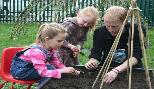

| Parents As Models Here’s another video with another Positive Respect Secret. This third secret goes hand- in-hand with the second. It explains the parent’s role in even more detail. As a parent... you are the primary…role model for your kids. You are their first examples of how to think, feel and act. Since you want your kids to be happy, you need to keep this in mind. This video helps avoid common pitfalls, explains why things may be going as they are going, and offers guidelines to help things go the way you want them to go, so you can be happy, too. Click here to watch the video: Parents As Models |
